Flipper Battlebot

4-lb aluminum BattleBot with a servo-actuated flipper weapon

Battlebot front

Summary

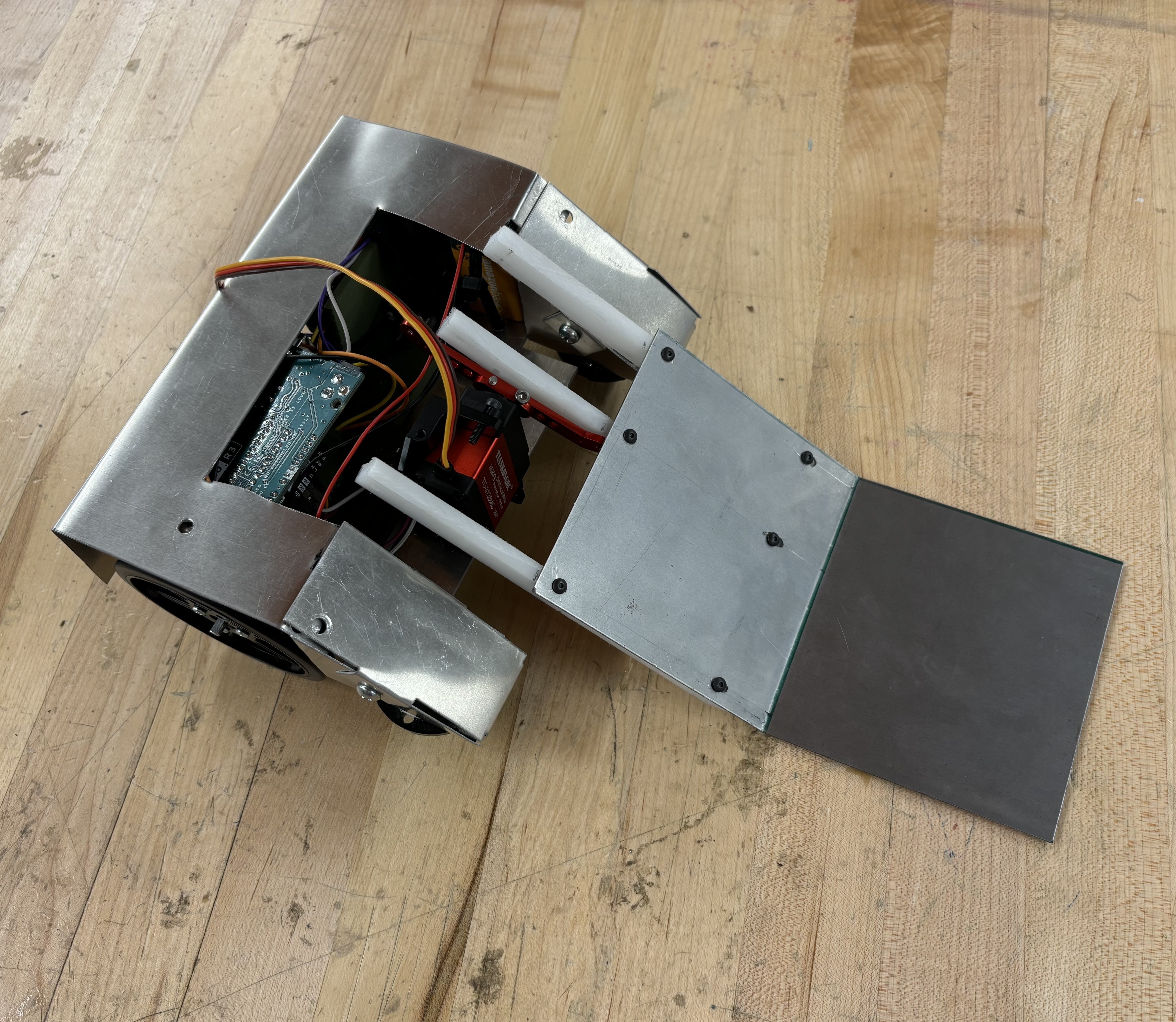
I designed and built a 4-lb flipper-style BattleBot as part of a three-person team for the 2024 Tufts University BattleBot Competition. I served as the lead mechanical engineer, focusing on mechanism design, structural protection, and internal packaging. The robot featured a lightweight aluminum shell, a servo-driven flipper, and modular internal mounts for electronics. Among 20 teams, the design received the Best Craftsmanship Award.

Key Features

Two-piece aluminum sheet metal shell, waterjet cut Servo-actuated aluminum flipper with custom mount 3D-printed internal structure for compact electronics

Design Constraints

  • Shell must withstand repeated impacts
  • Electronics must be accessible to repair
  • Internal volume constrained by hardware
  • Total mass limited to 4 lb

Structural Design

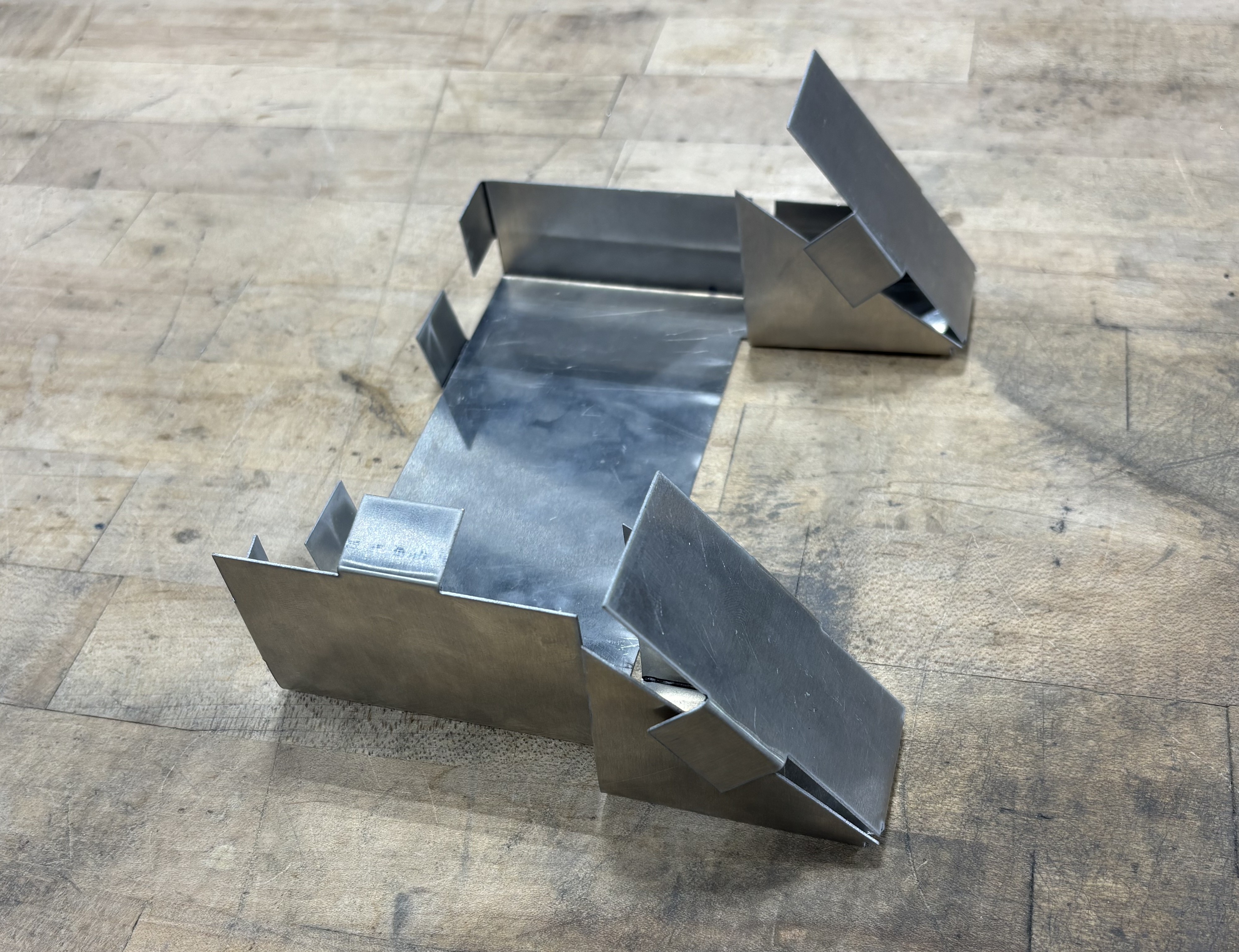
I designed a two-piece protective shell from 1/16-inch aluminum sheet metal to balance impact resistance and low weight. I used Onshape's sheet-metal tools to model bent geometry and generate flat patterns for waterjet cutting.

To allow fast repairs, I incorporated overlapping tabs and bolted joints so the shell could be quickly disassembled. I reinforced the base with an aluminum plate to prevent buckling from drivetrain loads and impacts, and I mounted the drive motors directly to the shell to reduce part count and improve stiffness.
Structural Design
Flipper

Mechanical Design

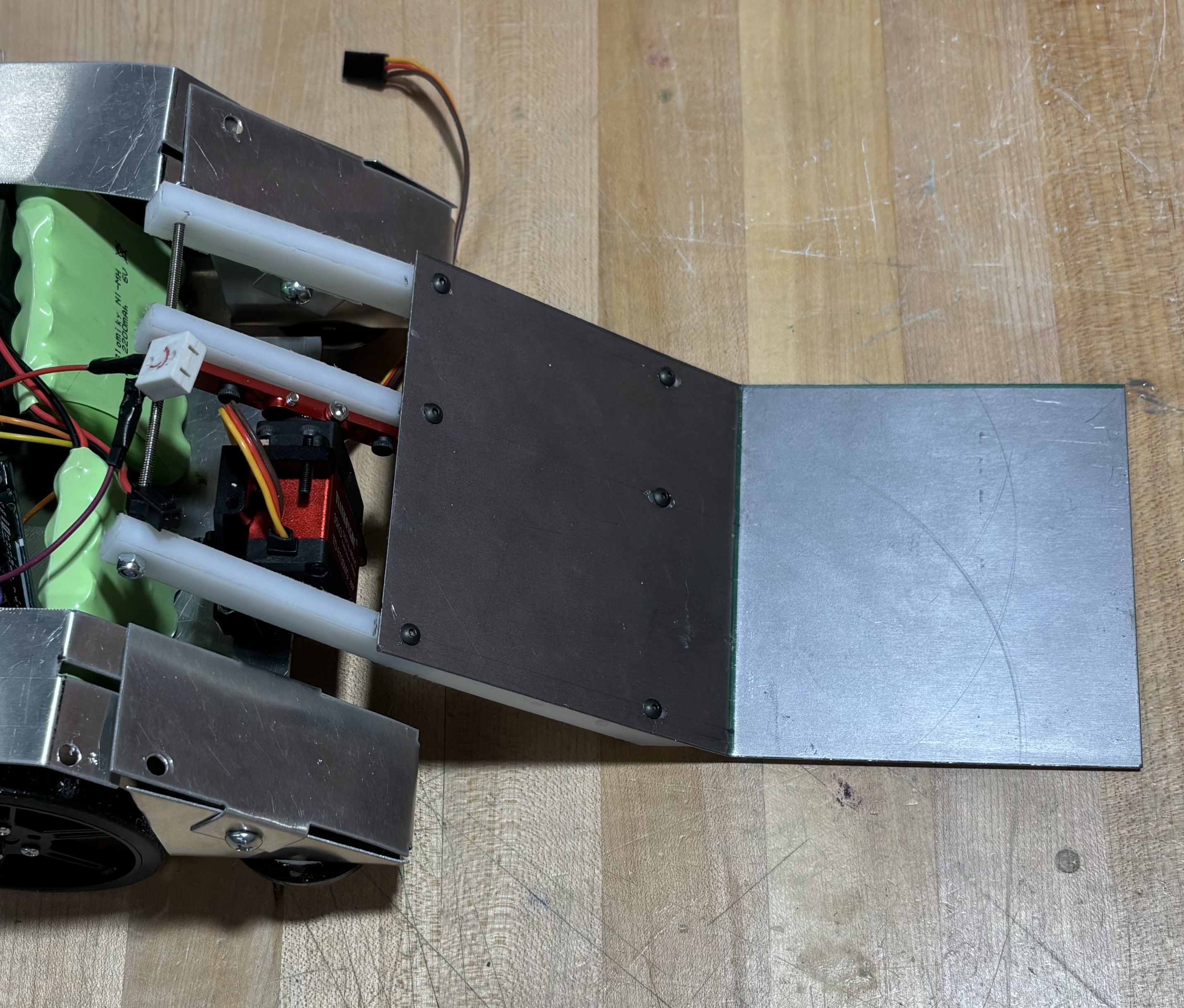
I designed a servo-actuated flipper driven by a 35 kg·cm high-torque servo. I formed the flipper arm from bent aluminum and optimized its geometry so the leading edge rested flush with the ground, making it easier for opponents to drive underneath.

Because the flipper could not mount directly to the servo horn, I designed a custom mounting interface using HDPE support ribs and threaded rods. This rigid coupling prevented rotational slip and misalignment under high loads and repeated impacts.

Systems Integration

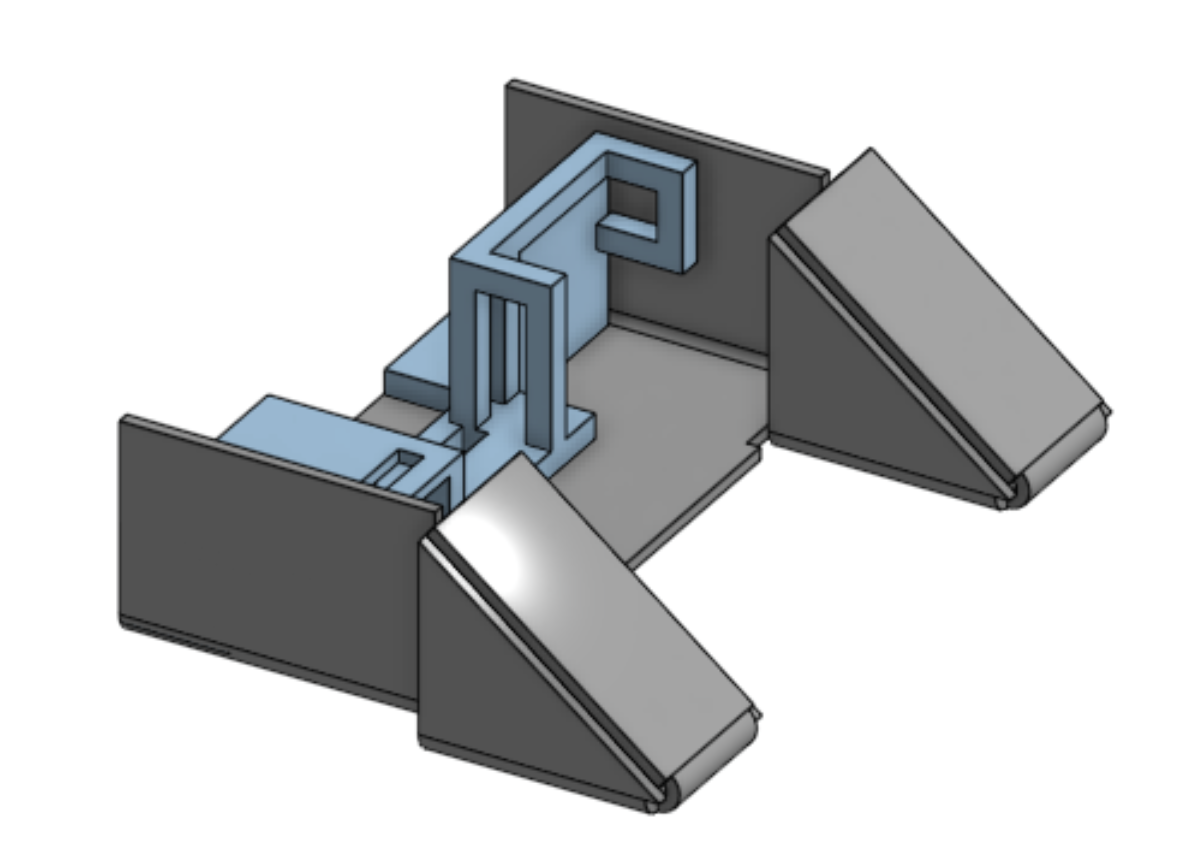
I designed and 3D-printed a lightweight internal scaffold to mount the Arduino, radio receiver, H-bridge motor driver, and three independent batteries for the drivetrain, servo, and control system. I iterated on several designs before achieving a compact, secure layout that maximized limited internal volume while maintaining clean wire routing and serviceability. This structure ensured all electrical and mechanical subsystems remained securely integrated during impacts and rapid maneuvers.

Packaging