Electric Race Car Chassis

Steel-tube chassis design for a Formula SAE electric race car

FSAE Chassis

Summary

I am leading the early-stage design of a steel-tube chassis for a Formula SAE electric race car. The chassis was developed to support simultaneous subsystem design while meeting Formula SAE rules, packaging constraints, and vehicle performance targets. I created a variable-driven chassis model to enable rapid iteration as component designs evolved and used preliminary FEA to guide structural decisions. The design continues to be refined through packaging studies, suspension integration, and system-level optimization.

Key Features

Adjustable geometry for concurrent subsystem design Variable-driven structure allowing for rapid iteration Packaging-centered layout optimizing volume and COM

Design Constraints

  • Vehicle must meet Formula SAE rules
  • Chassis must package all subsystems
  • Mass must be low and centered

Concept Design

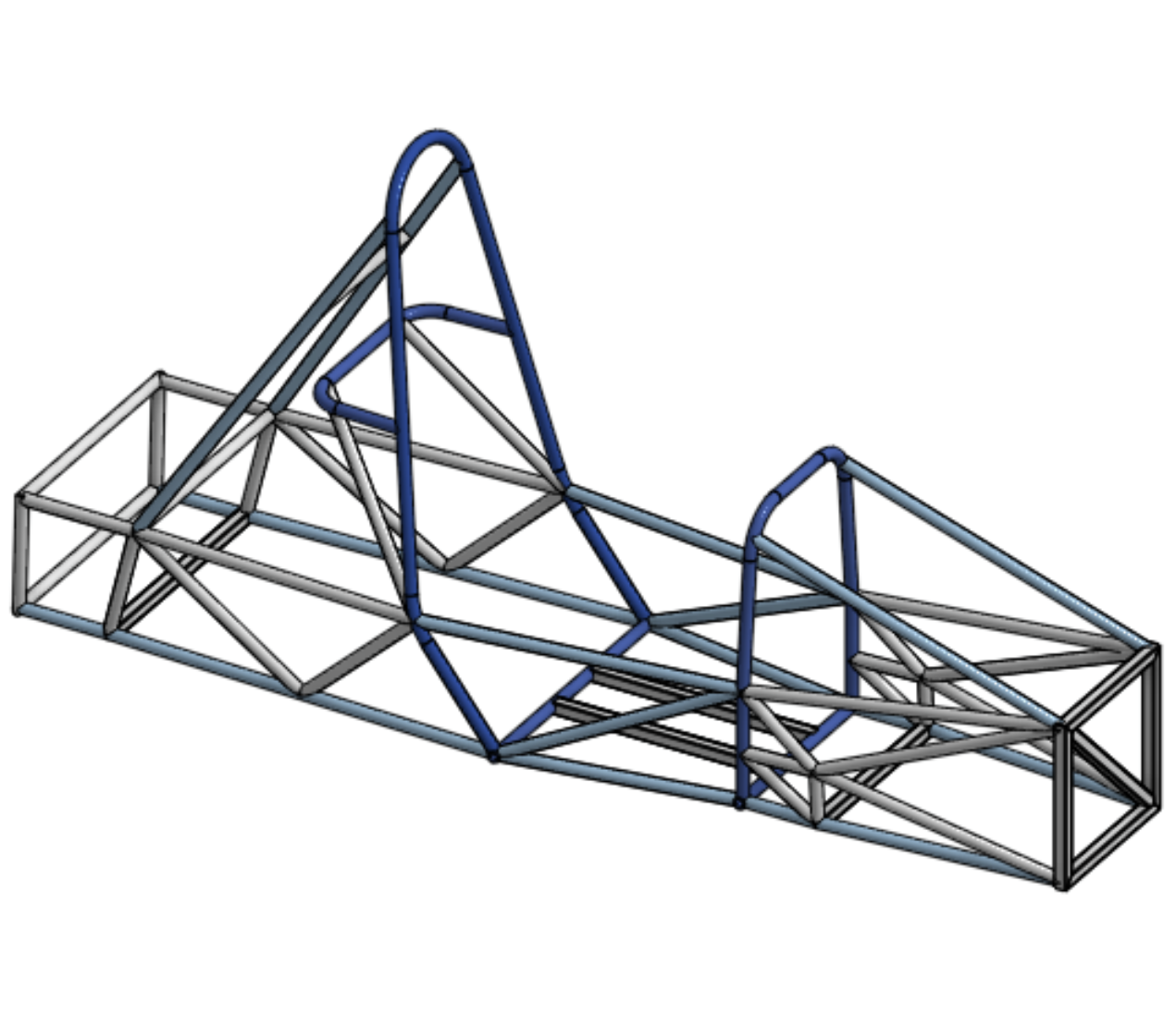
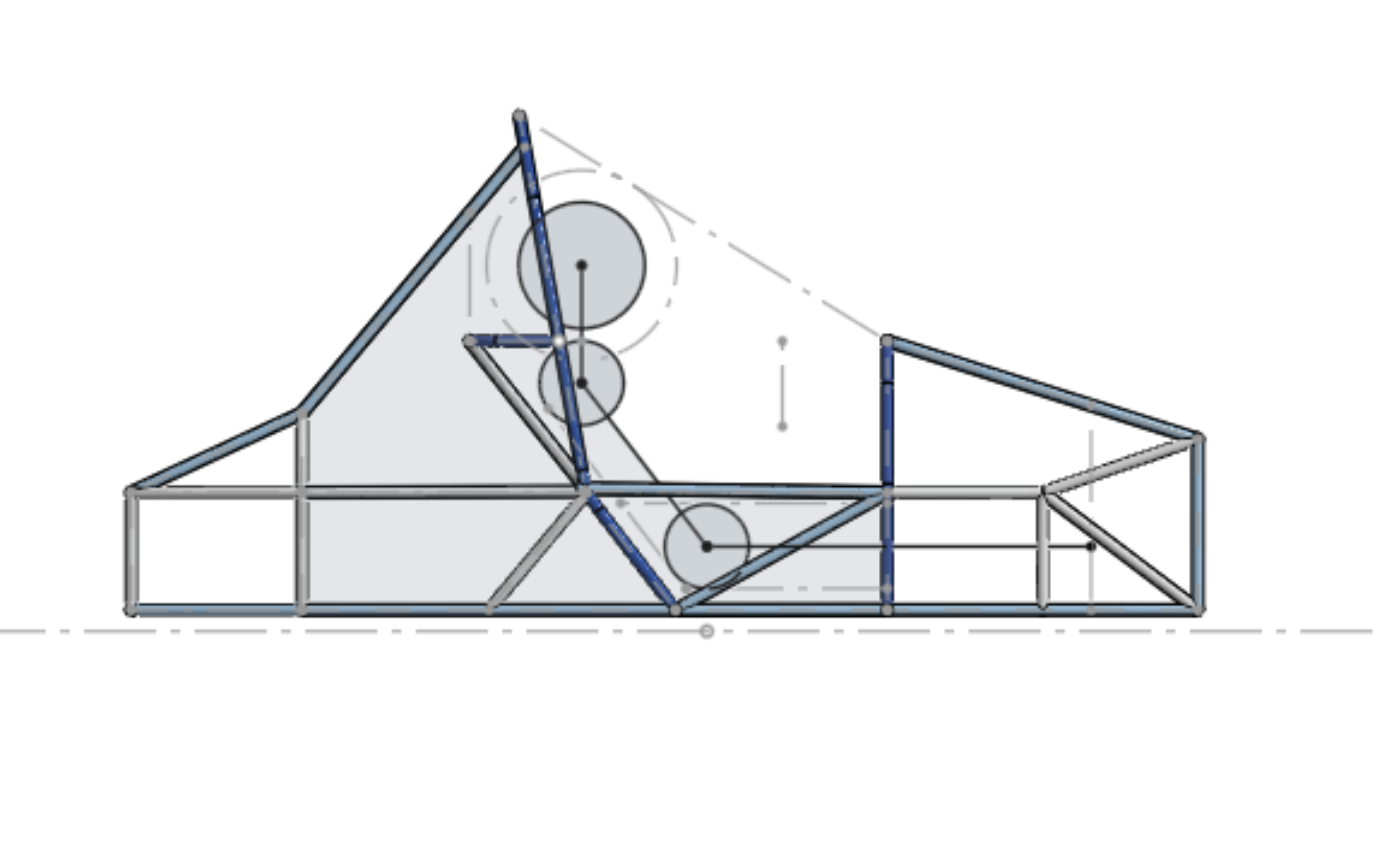
I developed the initial chassis concept in Onshape to support early-stage vehicle design while multiple subsystems were still evolving. I defined the chassis geometry using a rules-compliant, variable-driven cross-section sketch that set the primary structure. I then used circular weldment profiles to generate the steel tubing. This approach allowed key dimensions, such as seat angle and ground clearance, to be updated quickly as subsystem requirements evolved.
Concept Design

Initial:
Straight Main Hoop

Straight Main Hoop Chassis

Revision:
Bent Main Hoop

Bent Main Hoop Chassis

Packaging Optimization

After the initial chassis design, I focused on improving packaging space efficiency and center of mass placement. Because most mechanical components are located at the rear of the car, I aimed to place the heaviest component, the accumulator, closest to the cockpit to better centralize the mass.

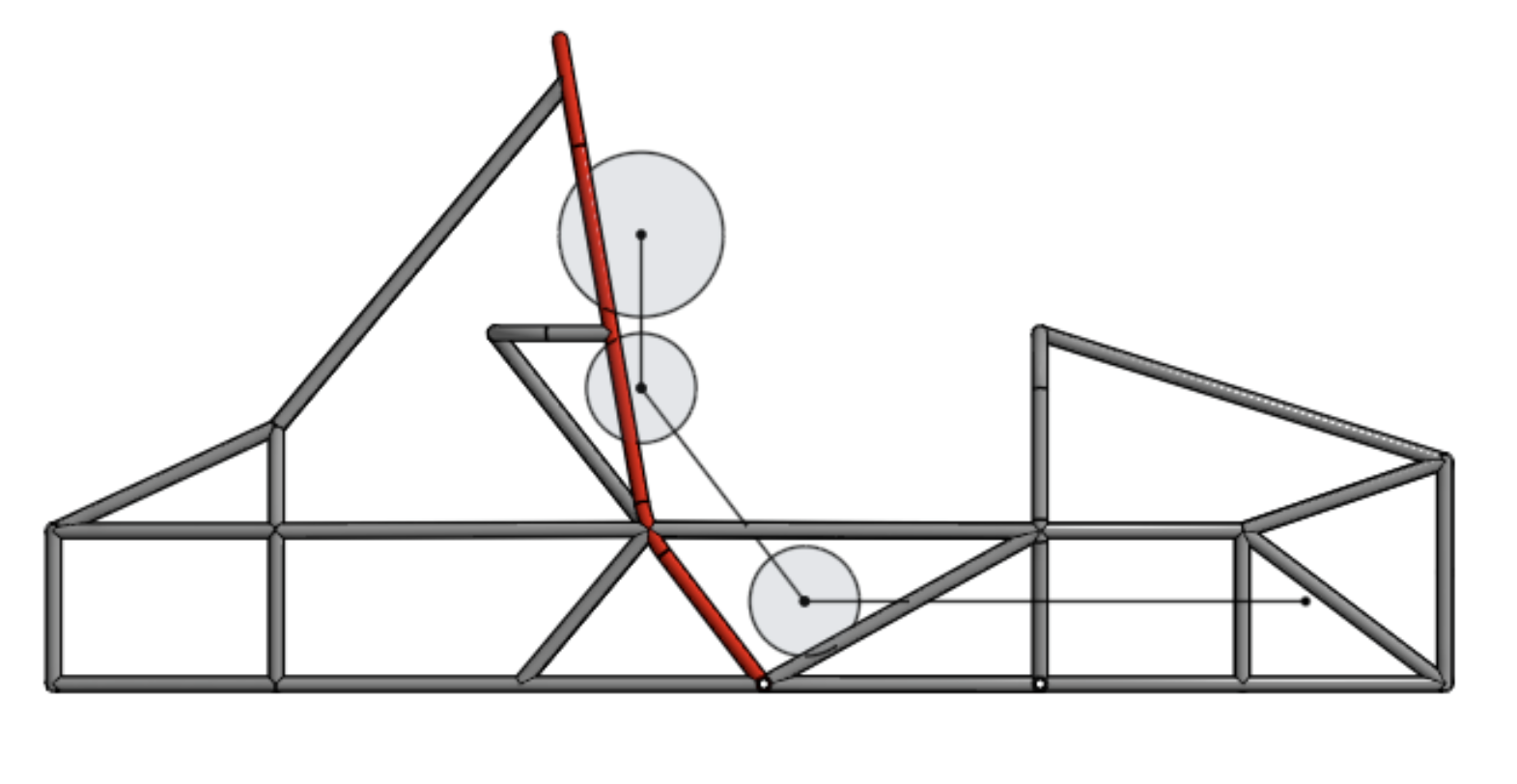
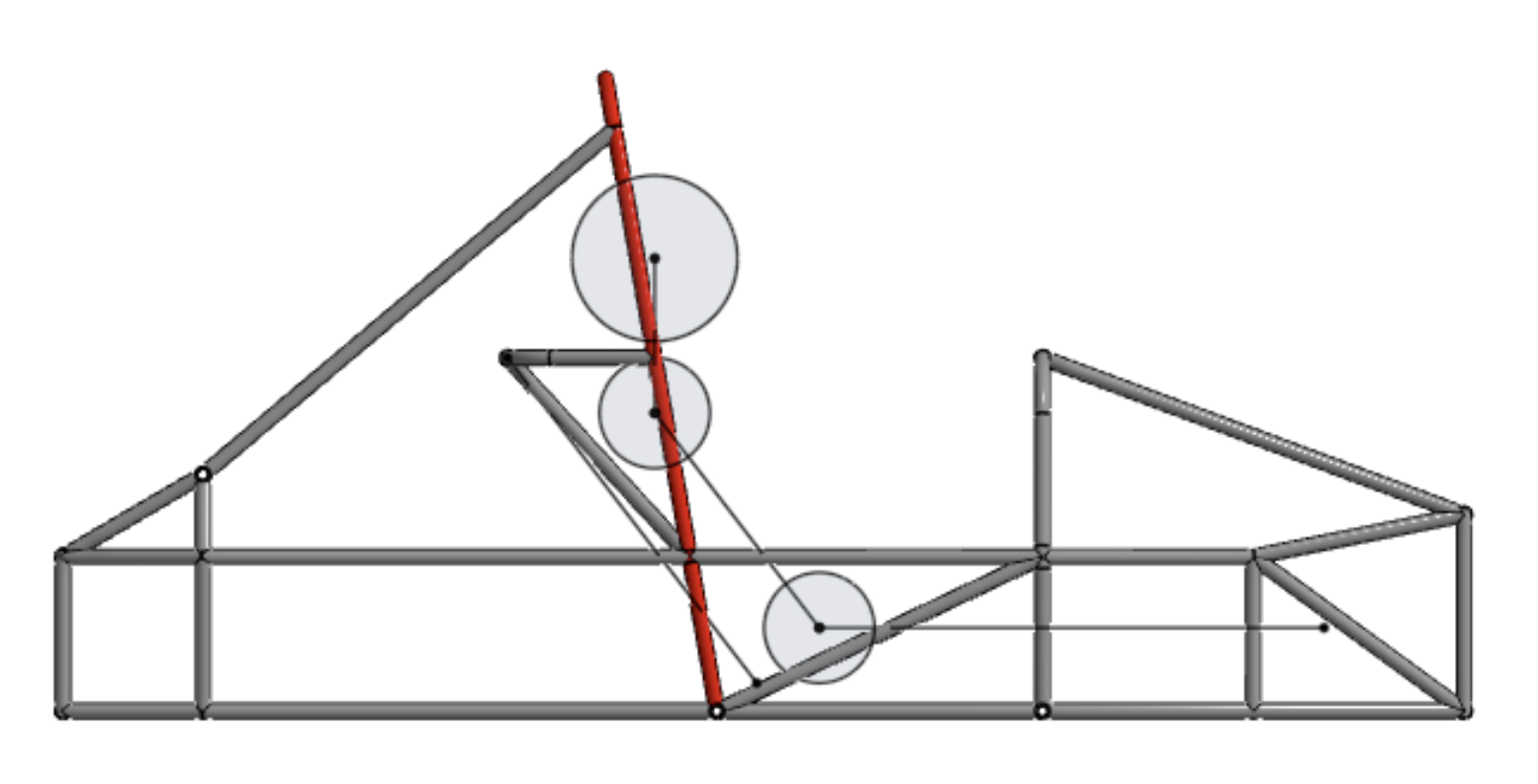
I redesigned the main hoop (highlighted in red) with a bend at the base, so the chassis bars ran parallel to the seat. This reduced how far the seat extended into the rear area, allowing more components to be packaged centrally in the car.

Full Car Assembly

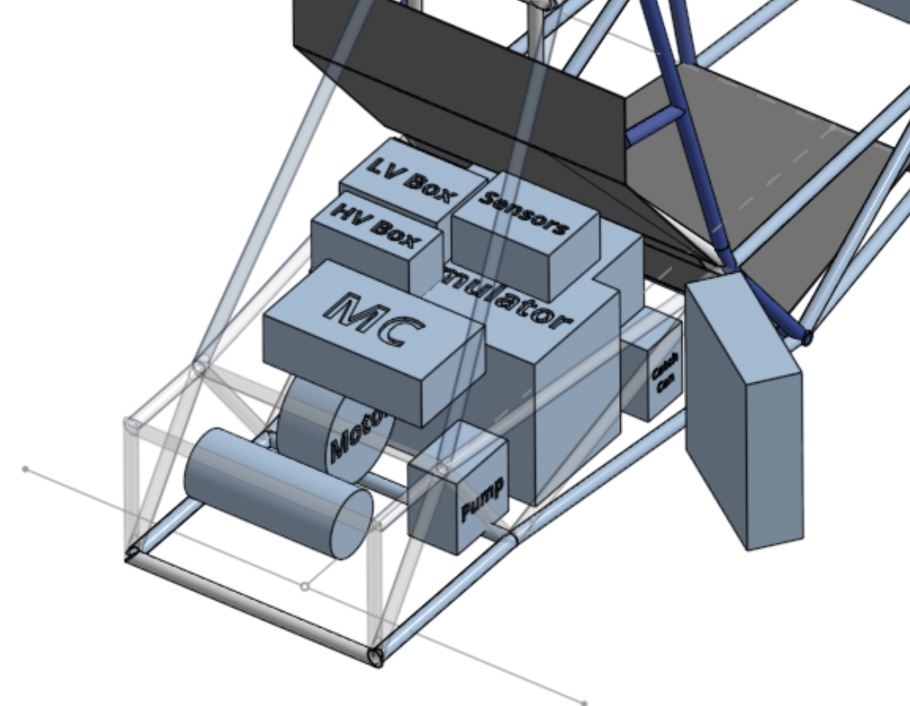
I built a full vehicle assembly to evaluate system-level integration and center-of-mass placement. I modeled approximate volumes and masses for major drivetrain, electrical, cooling, and low-voltage components. I then packaged these components within the updated chassis to assess fit, accessibility, and their impact on longitudinal and vertical center of mass. This analysis informed component mounting decisions and provided key inputs for suspension layout.

Packaging Assembly

Next Steps

I will continue to revise the chassis design as subsystem designs are completed. I plan to modify the chassis geometry around suspension pickup points and other mechanical mounting requirements. Once the geometry is finalized, I will design welding jigs and prepare the chassis for manufacturing.